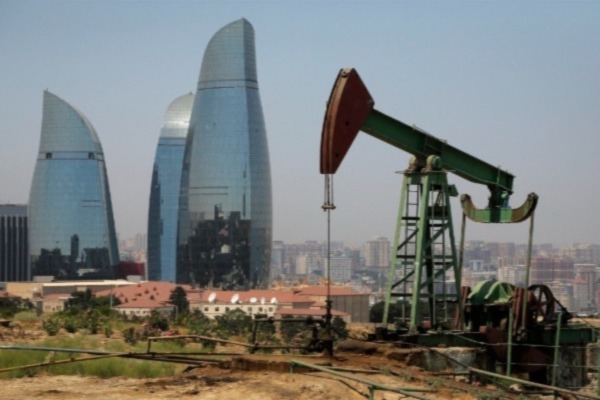
I recently did an interview with the Baku Tribune on the current energy crisis and related issues. I thought it might be interesting to post this here given that the crisis seems unlikely to be resolved in the near future.
Q: What is the outlook for the G7’s proposed price cap?
First of all, we need to understand that Russia’s response to the looming G7 oil price cap is going to be driven by politics and not by economics. The latter may play a role but ultimately it will be President Putin who decides how Russia responds.
On December 5th it will become illegal to import Russian crude oil into the EU or for EU entities to supply insurance and other services to buyers and sellers handling Russian crude. On February 5th the ban will be extended to Russian oil products. If, however, the oil is sold at a price lower than the G7-determined price cap, the buyer will still be able to access EU shipping and other services. The stated intention of the oil price cap is to maintain the supply of Russian oil to European and world markets but to reduce the revenues that Russia is using to finance its invasion of Ukraine.
That may work in pure economic terms. To keep its oil flowing, Russia would need to discount its sales price by an as-yet-unknown amount to reflect the higher shipping costs to non-EU buyers or actually discount its sales price to below the G7 oil price cap, which would enable it to access the EU market but reduce the government’s revenues from the sale because of the lower price.
As I note above, the decision is more likely to be political than purely economic. Russia could, as it has said, refuse to supply “unfriendly” countries with any oil and seek to sell the spare barrels to existing consumers such as China and India or find new markets in Asia or Latin America. However, that would be sub-optimal for Russia in terms of the price it can charge but, equally important, the world’s fleet of oil tankers will be challenged to move all this oil around the world because many voyages will become significantly longer than they are now. Today it takes around a week for a Russian crude cargo to reach an EU port – it takes six weeks if that oil is sold to China or elsewhere in Asia and that means a much higher demand for tankers, higher freight rates, lower revenues to Russia after costs and the potential for further market disruption as EU buyers look to countries other than Russia for oil supplies.
It looks as if the impact on Europe will be higher prices because of the need to source oil from non-Russian sources which could lead to higher transport costs. It is also likely to mean lower returns to Russia which will be forced to sell its oil to countries much further away and therefore pay more in shipping costs – while tanker owners are likely to make a good living given that the demand for their vessels will rise sharply if Russia does stop supplying the EU. Anecdotally, China has been one of the largest buyers in recent years of Very Large Crude Carriers capable of shipping two million barrels at a time so it may be better prepared than many other counties for this dislocation.
To sum up, costs to Europe will be higher, net revenues to Russia will be lower but it is ultimately a political decision that Russian will take as it responds to the price cap.
What will be the economic impact on Europe of the energy crisis?
We are already dealing with the economic impact on Europe. I suspect that we will see further energy price-linked protests in Europe unless governments somehow deal with the issue, however it has been caused (principally as a result of Russia’s invasion of Ukraine and Europe’s long failure to sufficiently diversify its energy supplies).
Rising prices of gas feed through to higher electricity prices, which are often set based on the marginal fuel being used in power generation – and that fuel is more often than not natural gas, which is more expensive than other energy sources but is kept on standby and sets the price when it gets used in power generation. Hence the higher prices we are seeing for “energy” across Europe can be directly traced back to Russia’s invasion of Ukraine and the gas supply disruptions that have been caused. There is certainly public concern about the high prices of energy but also of goods manufactured using energy, which are being called across Europe the “cost of living crisis”. Higher energy prices feed through not just to higher inflation but also to reduced demand by consumers and industry for most goods across the economy.
The likely solutions to this are – at the macro level – maximising other non-gas energy use, such as renewables, nuclear and even coal to get through the winter demand peak (gas was 25% of European energy supplies in 2020); building and expanding LNG import terminals so that gas supplies from Russia are replaced by gas supplies from other countries (Russian gas was almost 40% of European gas consumption in 2020); ensuring European storage is as full as possible as we go into the winter demand peak (more than half of Europe’s gas demand occurs between November and March) and reports suggest we have now reached 92% of capacity; reducing demand through rationing of gas (politically unpopular but possibly necessary). At a micro level, governments across Europe are considering how to respond, with the two most likely approaches being either an energy price cap or a direct subsidy to households – and potentially industrial users in some cases.
What would happen if there was a complete cessation of Russian gas supplies
If there were a complete interruption to Russian gas supplies, for example no gas crossing Ukraine and no supplies to Turkey through Blue Stream or TurkStream, that would put Europe in a more difficult position. However, the same tools would be available to companies and governments to meet the demand and ensure supplies reach those residential and industrial users that need them most. A complete interruption of gas supplies would, however, also impact Russia badly since Gazprom is a major exporter from Russia and also a large taxpayer in Russia. Its international revenues (and tax payments) would swiftly disappear if it were no longer supplying gas to a major market like Europe (although gas deliveries to China through Power of Siberia 2 would continue). So, cutting off all Russian gas supplies to Europe is not a cost-free option for Russia, there would be consequences to both sides.
One thing I believe we can be certain of is that there will continue to be increasingly strong pressure on the development of renewable energy sources (which may now also include nuclear power). Supply security – having been taken for granted for several decades as far as Russia is concerned – can no longer be assured for Europe. That means the move to sustainable, renewable energy sourced domestically is not simply unstoppable but will intensify, certainly in Europe and likely in other markets in the light of developments in the Europe/Russia gas relationship.
What is the situation with underground gas storage and the overall supply side?
The EU has been very focused on filling its storage capacity ahead of winter given the shutdown of Russian gas supplies to Europe. Having set a target of around 85% across the EU, this was achieved in September and storage levels now reported to be reaching 92%. Whether this level of storage –which may increase further before the European heating season starts in earnest – will be sufficient is hard to say but European governments have other tools they can use to get through the winter if demand is higher than expected. Rationing – cutting off companies on interruptible gas contracts – or brownouts taking place when a decision is made not to use gas in power generation but to reserve stocks for a future occasion can help manage the process of getting through the winter. Being willing to pay higher prices for LNG to ensure that gas cargoes reach Europe rather than go to the north Asian market (which will also be seeking gas supplies for its winter) is another tool but, as I note earlier, governments may feel the need to protect consumers from these high prices through direct subsidies or price caps. Doing that, however, can have an adverse impact on government budgets and it may be that not all governments will be able to achieve this.
European gas storage capacity represents around 27% of annual consumption. However, as I note earlier, storage is just one of the tools available to the gas industry and to governments to maintain energy supplies – more non-Russian gas – likely as LNG, more non-gas energy purchases, investment in additional infrastructure such as floating LNG storage while cutting off large industrial consumers or even load-shedding in the power sector with blackouts can – although painful – help manage the demand side.
What’s the outlook for Turkey as a gas hub?
The suggestion of a gas hub in Turkey to supply Russian gas to Europe was made by President Putin to President Erdogan recently in Kazakhstan. Putin suggested that Turkey offered the most reliable route to take Russian gas to Europe.
While such a project may be economically possible in normal times, I see little chance of it proceeding – even if President Erdogan has ordered a study of its feasibility – given that the EU has now concluded that Russia is an unreliable gas supplier to its markets. Turkey is a key NATO member and an important arms supplier to Ukraine as it resists Russia’s invasion. Germany recently rejected a Russian overture to resume deliveries through Nord Stream 2 while France rejected the same proposal on the grounds that it would increase Europe’s dependence on Russian gas, something the EU is finally working hard to significantly reduce.
Even in the darkest days of the Cold War, Soviet gas supplies to Europe were never interrupted, yet in the post-Cold War world vital infrastructure delivering gas to Europe from Russia appears to have been sabotaged according to European government sources. EU countries are also likely to have reached their own conclusion that they had become overly-dependent on Russian gas supplies and were at risk of supply disruptions like the ones we have just seen with the pipelines of Nord Stream 1 and 2. Understandably the EU is unwilling to take the risk of allowing its dependence on Russia to increase again and new pipelines such as Baltic Pipe, taking Norwegian gas to Poland, as well as additional LNG import terminals, are likely to be the way forward for the EU rather than resuming its myopic dependence on Russia.
Are oil companies investing enough in renewable alternatives?
The CEO of Chevron noted in a recent interview that western economies have failed to invest enough in alternatives to oil and gas as part of plans to reduce dependency on fossil fuels. I think he’s right but there are also other things that we could have done.
A concern I have is that, even with oil and gas generating large profits, companies will not increase their commitment to renewable energy in line with these windfall profits and instead use their additional earnings on share buybacks and dividends rather than taking the windfall and allocating it across both investors and new renewable technologies and processes so that the future energy agenda is advanced. To this I would add the looming threat of windfall taxes on the oil and gas sector by cash-strapped governments.
Just as it is not cost-free for Russia to stop supplying gas to Europe, it is also not (financially) cost-free to invest in renewables. I think the large, global oil and gas companies have the technology, the people and the financial resources available to make a significant difference to the renewable energy landscape. Just looking at the industry, some are well ahead of the others in terms of their commitment to, and expenditure on, renewable sources of energy.
It is certainly true that we have been slower than we should have been – with the benefit of hindsight – to adopt renewable energy as an energy source – although the pace is now picking up. It is not just a matter of – for example – installing wind turbines offshore, we need cables connecting them to the shore, we need a grid that can distribute the energy from where it is generated to where it is needed and if necessary we need subsidies and simplified planning processes to get the process started. Nuclear should also be part of the renewable energy mix in my view. While there have been accidents in first-world countries, the impacts of Three Mile Island and Fukushima Daiichi have not been so catastrophic as to rule out nuclear energy forever, given the climate challenges that we face.
Technology and processes improve and new energy options become available. Energy conservation is an underexploited areas – home insulation, electric vehicles, heat pumps etc are all areas which could be more widely exploited if we chose to do so. That of course – like Russia’s approach to international gas markets – is a political decision as well as an economic decision. The question is whether we are really ready to take the hard decisions to invest and change our energy supply mix even more quickly than it is currently changing.
 Global Energy Comment