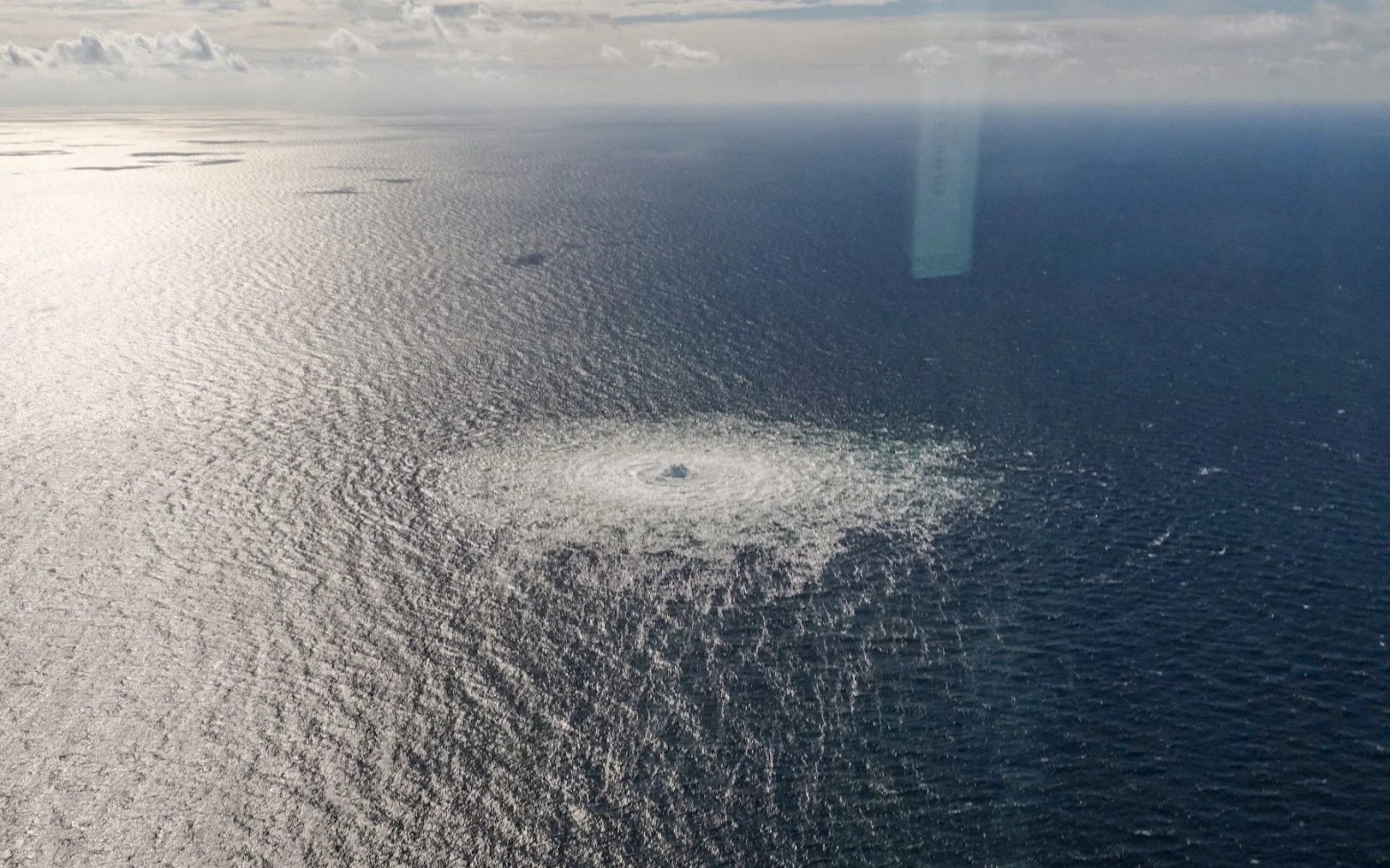
This morning we are all reading headlines about a series of explosions on both the existing Nord Stream 1 pipeline between Russia and Germany and its almost-complete – but dead in the water – counterpart, Nord Stream 2. Three explosions took place and large volumes of gas have been released from the shut-down pipelines into the Baltic, evidenced by pictures of them and exclusion zones being established in the Baltic. Sweden and Denmark have launched their own investigations because the pipeline passes through their economic territory. At the same time, coincidentally? – probably not – Norway was commissioning Baltic Pipe, a new 10 bcma capacity pipeline taking Norwegian gas to Poland, which wants to reduce its own dependency on Russian gas for security reasons.
The extent of damage to the Nord Stream pipelines is as yet unknown – as is the culprit. The words “terrorism” and “sabotage” have been frequently mentioned. Quite possibly, but not the kind of terrorism that we have become used to. Al Qaeda haven’t suddenly perfected the ability for deep sea diving and underwater demolition. A state actor is much more likely to be involved. Who benefits? Financially, nobody. The pipeline will need to be repaired if it is to be used to deliver any Russian gas in the future to the European market – there is still an open question as to whether the two pipelines have increased Germany’s dependency on Russian gas to what is now seen as a dangerous level and it is quite possible that we will see a continued push by Europe for increased supply and route diversification of gas supplies from Russia to Europe – if commercial relations between the two can be restored at some stage in the future.
Nevertheless, one of the key beneficiaries in terms of increasing the degree of uncertainty – and therefore pressure – in the European gas market must be Russia, where President Putin is hoping to weaken European support for the Ukrainian side with ongoing “technical difficulties” on Nord Stream 1, which meant that its suspension for technical reasons has been extended and no gas has been flowing through it. The message to Germany seems clear: even if Berlin did want to buy gas from Russia (perhaps in the event of a very cold European winter) – which is still an unlikely prospect given the current state of international relations – there will be no Russian gas available to buy and Germany must look elsewhere if they are not to be on good terms with Russia. Even President Putin’s spokesman Dimitry Peskov noted that “nothing could be excluded” at this stage – although we might perhaps assign a lower probability to the idea that rational buyers would intentionally blow up their own import infrastructure.
Just as a reminder for those not around in the 1970s and 80s, even during the darkest days of the Cold War, the Soviet Union never weaponised gas supplies to Europe in this fashion, perhaps understanding that they could only do that once. A disruption of energy supplies to Europe would only confirm the views of those who had opposed buying Soviet gas in the first place as putting Europe in thrall to a dangerous adversary and encourage a general move away from Soviet gas supplies. The same is now coming true in the case of Russia – we are seeing countries actively move away from their dependency on Russian gas supplies – Poland and now Germany seeking alternative supplies, often through the LNG route – and countries looking for additional – ideally domestic – energy sources such as wind, solar and even perhaps more nuclear power in the generating mix.
What does this mean for Russia and Europe?
These are early days in the case of the destroyed pipelines and much more will be written about them in the coming days. Evidence will be gathered, ship movements analysed, motivations scrutinised and future actions watched closely for a guide as to what happens next. The existing gas volumes delivered to Europe through the remaining pipelines which cross Ukraine will be a litmus test for how much more serious this situation may become. Any reduction in gas volumes sent through Ukraine (or even through the Blue Stream line to Turkey and Bulgaria) would only confirm the views of those arguing that Russia has undoubtedly weaponised its gas exports and Europe must move ahead rapidly with diversifying its sources of gas, its import routes and its alternative energy sources to avoid being caught in the current trap of shrinking Russian gas supplies in response to political decisions taken by European governments.
 Global Energy Comment